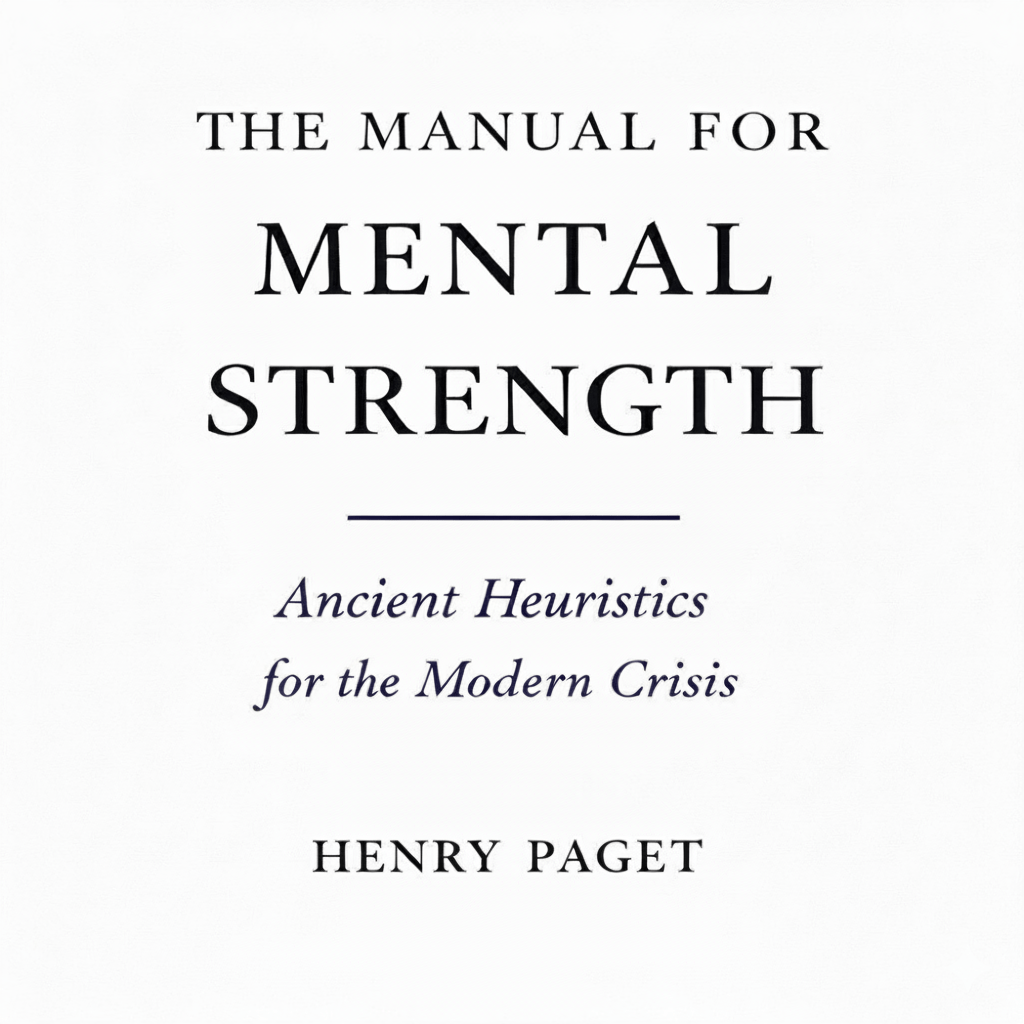
Hi, I’ve just published my new book, The Manual for Mental Strength: Ancient Heuristics For The Modern Crisis.
In this book, I talk about my struggle with mental health and how I built resilience. And my goal is for this book to help other people improve their mental health as well.
This book started as a Quora answer that went viral with several hundred upvotes, so I decided to expand it into a book.
I hope you enjoy it, and please leave a review because reviews help push my book out to more people. As an independent author, reviews help me grow and improve massively.
As I’ve mentioned before, I’ve had chronic wrist pain for 2 years.
Several months ago, I had my second surgery to fix the issue with my wrist.
I’m trying to strengthen my wrist with physio, but it’s excruciating.
I’ve just been for a walk, and I couldn’t help but think pride was the cause of my injury.
Pride seems to be causing problems for everyone nowadays.
Let me start with how pride destroyed me
I injured my wrist lifting too much weight at the gym.
Why did I want to lift so much weight, you ask?
Well, it was because I wanted to gain as much muscle as possible to attract the ladies.
I was trying to gain muscle above all else to look superior to others and increase my chances of getting with more women.
The sad truth is that most women don’t even care about muscles that much.
And the ex-girlfriend I had during the time of the injury couldn’t care less about how much muscle I had.
My story is only scratching the surface
My friend told me a story about his friend, who was on steroids and is a bodybuilder.
Apparently, this bodybuilder lifted so much weight while barbell squatting that his knee popped out, and he had to have surgery to fix it.
Also, when I’ve browsed online, I’ve seen the ‘turkey teeth’ phenomenon, where young men and women travel to Turkey to have their teeth replaced with white, artificial teeth, even though their teeth were fine.
I’ve heard and read horror stories about Turkey teeth.
Also becoming more common is leg-lengthening surgery, which seems problematic.
Men can’t bear the receding hairline anymore
Every man and his father is getting a hair transplant these days.
That’s fine if people want to do that, but coming from someone with a receding hairline, having one isn’t that bad.
We’ve turned into a superficial bunch
It seems most people nowadays are prioritising their appearance over their character.
I would rather try to improve my character, that is to say, working on being a good person, as religion and philosophy advise, than what hairstyle I have.
So many people are putting the cart before the horse
I think character is what we should all start focusing on improving, rather than our looks.
But even when people want to improve their looks (which is ok in moderation), many go straight for artificial treatments.
For example, instead of losing weight the healthy way, people are turning to Ozempic and gastric bypasses.
Instead of building muscle to stay healthy, people are taking steroids and lifting so heavy that they’re stressing their bodies beyond their natural limit, which is a recipe for injury.
The point I’m trying to make
I don’t want to seem like I’m moralising.
I just want people to improve themselves for the right reasons and the right way.
Because most of these treatments I’ve mentioned are unnecessary.
And for many people, they cause a lot more harm than good.
I’ve fallen into the pride trap.
And I’ve been in chronic pain for 2 years, and I don’t think my wrist will ever be the same.
I don’t want you to suffer as I have.
Because life is much more complicated when you’re in chronic pain.
You have one body.
If you ruin it, it may be ruined forever.
As a rule of thumb, I only have medical procedures when I need them
A word you might not have come across is called iatrogenics, which means illness, injury or even death caused unintentionally by medical treatment.
For example, I read a story about a girl who died from taking the contraceptive pill. God bless her. Her name was Aine Hurst. She was only 19 and from the United Kingdom.
That’s iatrogenics.
And that’s why I avoid unnecessary medical procedures, and I advise you to do the same.
Iatrogenics causes more deaths around the world than road traffic accidents, malaria and diabetes.
But that’s only the ones we can distinguish by recorded fatalities.
Many effects from iatrogenics go under the radar.
For example, my mum got put on potent antidepressants as a teenager.
These antidepressants had a gruesome withdrawal effect on her and have permanently affected her to this day.
And the whole situation has caused a massive strain on my family.
I know for a fact there are lots of families going through similar scenarios to mine.
Why do you think we’re never told about iatrogenics?
I write one in-depth essay every Thursday. Join 180+ subscribers getting my best work for free:henrypaget.substack.com
The question I put to you is: why wouldn’t life be unbearably difficult and hard?
We are all born with physical bodies that succumb to pain.
We all deal with mentally distressing problems in our lives.
Life is meant to be this way, so we shouldn’t resist it.
Just like when you use your hands as hands and your feet as feet, you’ll occasionally feel pain and fatigue.
The same is true with your mind when you experience challenging moments in life.
In fact, I would say it’s better to face the difficulties and challenges life offers than to choose the easy life.
If you’re pushing yourself in your vocation and life, you will face challenges and hardships.
Instead of getting bogged down, embrace your challenges.
Have you ever worked out?
If you have, you’ll know that when you lift weights, you feel the burn in your muscles.
If you’re new to working out, you might get worried about feeling the burning pain.
But if you’re a more experienced gym-goer, you’ll know that the burning feeling causes small tears in your muscles.
And in fact, because of these tears, your muscles grow back even stronger.
Many of us can understand that subjecting our bodies to stressors helps our muscles grow stronger.
But many of us struggle to apply this concept to our lives.
Great discoveries and innovations are usually a byproduct of difficulty, strife, and sometimes disaster.
Nassim Taleb said, “Difficulty is what wakes up the genius.”
For example, after every plane crash, the aviation industry reevaluates its safety protocols and strengthens them, leading to fewer fatalities in the future.
An author will write book after book until one does well, then will use the feedback and the complaints to make that book better.
Hardships and difficulties force us to grow
We live in an era where humans have overcome most hardships and difficulties.
For example, medicine is at its best ever, and people are living longer.
Health and safety are at an all-time high.
Most of us live at a similar level of comfort to the kings and queens of times gone by (probably even better with the technology we have).
Even when we face the event that causes the most suffering, death, modern medicine has enough painkillers so we don’t have to feel pain.
We live in a world with fewer hardships and problems than ever
This is a net good as a whole, but when we live lives devoid of challenges and hardships, we avoid the stressors that enable us to grow.
My story
In 2021, I was diagnosed with health anxiety because I kept thinking I had a lung disease and other illnesses.
The reason I got health anxiety, I believe, was because I was working a desk job, and I worked from home, which resulted in a lot of idle time searching my symptoms via doctor Google. (Idle hands are the devil’s workshop).
Because I was doing nothing with my free time, the vacuum in my life was filled with the wrong things, i.e., googling my symptoms online and getting anxious.
I cured my health anxiety by first getting the all clear from the doctor regarding my health and then being deliberate on how I filled that vacuum/void in my life.
So I started writing and reading, then going on more walks and lifting weights.
Filling the vacuum by doing difficult things helped my mental health massively.
And that’s one of the reasons I still read/ write daily and consistently work out.
The bottom line
Life is hard because it’s meant to be. As Nietzsche said, “What does not kill me makes me stronger.” And in the sense of fatal plane crashes, “That which kills me makes others stronger.” Via improved safety protocols. Challenges and hardships are part of evolution. They force us to evolve. Embrace them. Be more concerned if your life is devoid of hardships and challenges.
Credit for the picture goes to Dan Steffen from the Asphalt Jungle.
I write one in-depth essay every Thursday. Join 180+ subscribers getting my best work for free:henrypaget.substack.com
I was recently watching the highlights of solo climber Alex Honnold scaling a skyscraper in Taiwan without any protection.
As he’s climbing the skyscraper, he makes it look easy. But the only reason he makes it look easy is that he’s been practising climbing for years, and he’s almost perfected the art of climbing.
Watching Alex climb the skyscraper got me thinking, “Humans can do great things when they never stop practising their craft.”
But how many of us never even start practising our craft?
Alex has been climbing for over a decade, and that’s precisely why he’s such a good climber.
How good can we get?
I often think about how good I’ll be at writing after several years of practice. Then I remember that it’s best to focus on one day at a time and never break the habit.
There’s a price we have to pay to be great at our craft, and most people are unwilling to pay it—that price means showing up every day.
Whenever we want to get good at something, we’re not good at it at first
When I first started lifting weights, I could barely lift the 20kg dumbbells. But at my strongest, I’ve been able to lift the 50kg dumbbells with ease. But this improvement in strength took around 3 years. It all starts by getting better one day at a time. And if you keep that up for enough days, months and years, you’ll be surprised by what you can achieve in the long run.
Jeff Bezos is spending millions on a giant clock that will last for thousands of years
I listened to a podcast where Jeff Bezos was the guest, and he mentioned that he’s planning to build an expensive clock tower. He wants this clock to last 10,000 years and symbolise long-term thinking.
I can see where Jeff is coming from with this. Most of us think short-term, so we get mediocre results. But if we can think long term and consistently get better at our craft, we’ll, in the long run, be able to achieve amazing feats like Alex has, without needing to climb a skyscraper (As a human race we can also achieve amazing feats in centuries to thousands of years that isn’t possible in one lifetime, this was also what Jeff was getting at).
If Alex can climb a skyscraper, what can you do?
Alex is proof that humans can do amazing things. What amazing thing would you like to do? Just like Alex climbed the skyscraper, you can set out to achieve extraordinary things. But you need to pay the price every day to get better. It’s only when we pay the price every day that we can eventually achieve the seemingly impossible.
If it’s humanly possible, you can do it to
I’m not telling you to climb a skyscraper like Alex, but it’s worth looking at people you admire or who have achieved great things that you’d like to achieve.
For example, one of my favourite writers is Nassim Taleb. His work inspires me, and I’d like to produce work that’s as helpful as his.
Another person whom I look up to is Elon Musk because he’s achieved so much in many different endeavours.
When someone does well in life, I don’t get jealous. In fact, it inspires me to achieve remarkable feats.
Life would be boring without ambitious, wild goals
Big goals are what get me out of bed in the morning. If I didn’t have my goal of becoming a writer, my life would be boring.
Because I know how difficult it is to make a living as a full-time writer, this fact inspires me even more to become one. Because reaching that milestone will taste even sweeter.
Thank goodness for crazy people
Sometimes we need to witness someone doing something so audacious and crazy that it helps us realise how capable we are of almost impossible feats. When we realise that humans can achieve the seemingly impossible, it motivates us to overcome even the most difficult challenges.
I write one in-depth essay every Thursday. Join 180+ subscribers getting my best work for free:henrypaget.substack.com
I was writing about mental robustness, and I couldn’t help but think of several years ago when I was dealing with crippling health anxiety and was prescribed sertraline by my doctor.
I took sertraline for a few days but quit because it made me feel strange and nauseous.
I couldn’t help but think of the drug issued by the government in Aldous Huxley’s Brave New World called soma.
Soma was the ultimate pleasure drug, and in the book, during times of civil unrest, instead of police using batons, they’d spray the drug in vapour form to make people docile.
Soma would seem to make your problems go away. And in higher doses would provide a mental escape from reality.
We aren’t given a specific pill by the government that makes us docile
But we are exposed to all sorts of pleasures that can tranquillise us against ever thinking for ourselves or doing anything worthwhile.
For example, growing up in my teen years, I spent a lot of my time browsing adult content, getting drunk, spending 10+ hours a day gaming, was addicted to social media, binge-watching TV, and binge-eating.
At the time, I didn’t realise, but I was burying my soul in soma-like pleasures.
It wasn’t until I became an avid reader in my early 20s that I realised how I was shooting myself in the foot with my degenerate behaviour.
I came across Stoic philosophy and read Benjamin Franklin’s biography. What’s common among the most erudite people is that they know there are objectively right and wrong ways to behave.
Acting with virtue is how we act appropriately, and acting with vice is how we act wrongly
When I learned from Stoic thinkers like Seneca and Marcus Aurelius about virtues and vices, I knew I’d been acting wrongly with my degenerate behaviour.
I knew this because I was so steeped in degeneracy that I was finding it impossible to do anything worthwhile apart from working a job in retail. As much as the job in retail paid my wages and I was grateful for having it, I didn’t see it as the ultimate worthwhile use of my time. Just like Jesus wouldn’t have lived the life God wanted him to if he didn’t sacrifice himself on the cross.
Take this quote from Matthew 6:24:
“No one can serve two masters. Either you will hate the one and love the other, or you will be devoted to the one and despise the other. You cannot serve both God and money.”
This passage says you can’t serve two masters. I think one master is the right master, for example, philosophy and religion, and the other master is wrong, which in this case is money. Still, it could be sex, addiction or whatever else that takes you away from living properly.
I believe we can’t live properly when we’re serving the wrong things, like vices. But if we are willing to serve the proper master, which means serving virtues, we’ll gain mastery of ourselves, and we can make the most of our lives.
But what do I know?
My experience of being steeped in degeneracy and vice made it feel impossible to do anything worthwhile with my life.
Now that I try my best to be virtuous, I’m not getting distracted by all this soma-like pleasure in the world.
The main virtues I try to practice are self-control, courage, justice and honesty, even though I falter at times.
The most important virtue is courage. Because if you don’t find the courage to behave virtuously, you won’t.
Take what you want from this essay. I’m only trying to get to the truth about how cheap modern-day pleasures and vices seem harmless, but in reality, they keep us in chains (well, at least they have for me).
The worst part is that when vices entice you, you’re barely aware of it. It takes real self-awareness and humility to stop yourself from going down the wrong path.
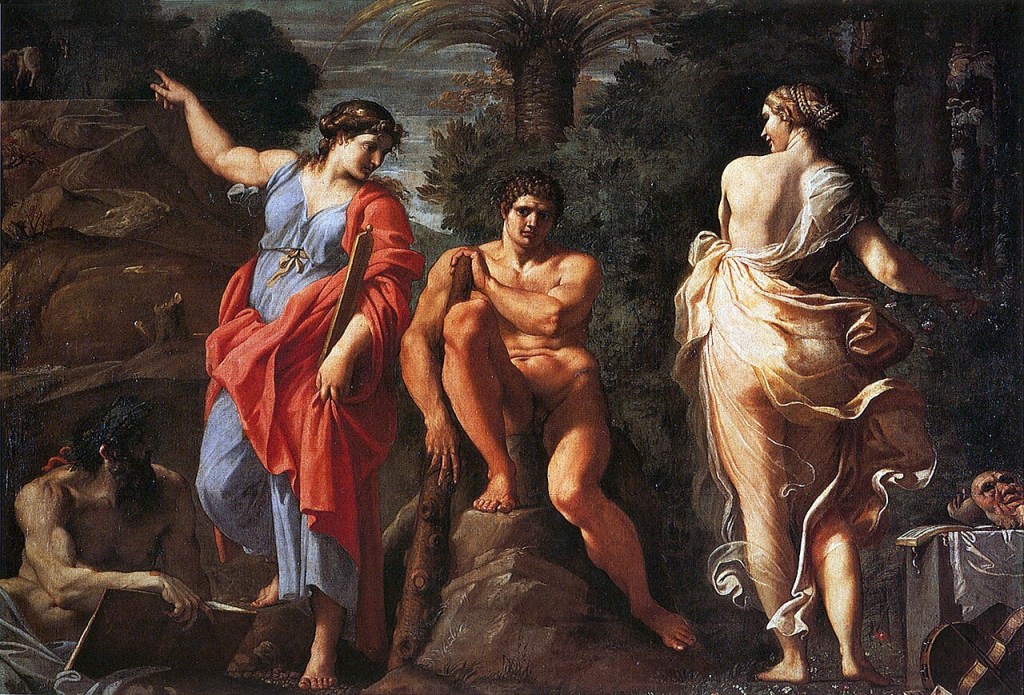
Credit to Wikimedia Commons for the painting: Hercules at a crossroads.
–
I write one in-depth essay every Thursday. Join 180+ subscribers getting my best work for free:henrypaget.substack.com
Several months ago, I watched a video from my Grandma and Grandpa’s wedding day. The footage was from the 1950s.
Sadly, my grandparents have passed away, but watching this footage got me thinking, “Life is so short.”
I think it’s crucial to remind ourselves about the shortness of life.
Because many people make the mistake of acting like they’re going to live forever.
If you act like you’re going to live forever, you live with no sense of urgency. It’s this sense of urgency that drives us forward. Better to harness it to make the most of your life.
In this article, I aim to show you how brief life is, so you can make the most of the time you’ve been given—not squander it.
A lesson on living from a Roman Emperor
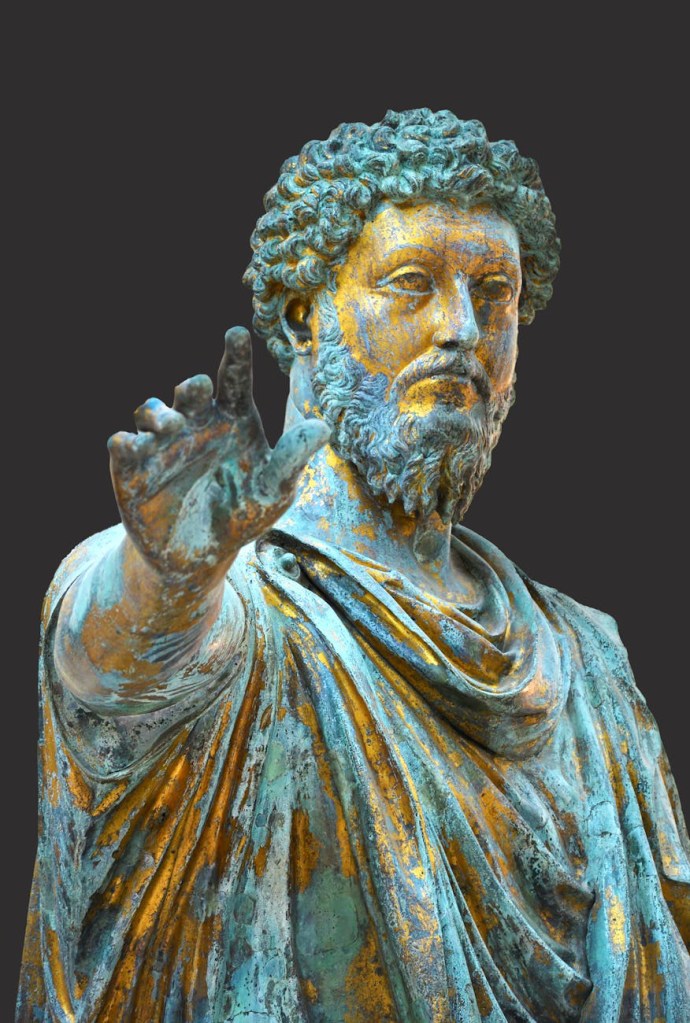
“Think of yourself as dead. You have lived your life. Now take what’s left and live it properly.”- Marcus Aurelius, Stoic Roman Emperor
I remember first reading this quote in Marcus Aurelius’ diary called Meditations, and I instantly saw how useful it was.
When you deeply realise you’re going to die at some point, you realise it’s the ultimate deadline.
Being alive is a gift; if we don’t live our lives properly now, when will we?
How I live life properly
I agree with what Christianity and Stoicism (the prevalent philosophy in ancient Rome) say about living.
Here are the tenets of how I try to live properly.
Live virtuously, in other words, be a good, noble person. If you follow the cardinal virtues such as wisdom, courage, temperance and justice, you’ll be living virtuously.
Focus on what you have control over, pray for what you don’t.
Love others as you love yourself.
Help others in a way that matches your unique talents. To serve the common good is divine.
Don’t let what happens affect you. Nothing can happen that isn’t natural.
Advice from a Holocaust survivor
“Live as if you were living already for the second time and as if you had acted the first time as wrongly as you are about to act now!’’ Viktor Frankl, Holocaust survivor and psychologist.
Life is no dress rehearsal. We get one chance at living; if we don’t live this one properly, it will be gone forever.
That’s why it’s vitally important to live in such a way that, on our final day, we can go in peace.
In the book, The Top Five Regrets Of The Dying, by palliative care worker Bronnie Ware, she said one of the main regrets that people have on their deathbeds is:
“I wish I’d had the courage to live a life true to myself, not the life others expected of me”.
This advice taught me that I need to pursue a life and vocation that makes me intrinsically happy. I say ‘vocation’ because most people spend most of their waking hours at work.
Where I’m from, every man and his father works in factories; there’s nothing wrong with that if that’s what someone wants to do.
But it wasn’t for me, so I quit my job and faced significant backlash from friends and coworkers. People said, “You’re silly for leaving a stable job.” I cared a bit, but not enough to make the same mistake twice and work another factory job because that’s what people expected of me.
I tried different jobs, like retail and a police officer, but they weren’t right either.
Now I work in the financial services industry, which I enjoy and feel valued in, and it gives me time to pursue my hobbies, like writing on the side.
If you feel like you’re living your life wrongly, there’s a good chance you aren’t listening to your gut. Journal what you’re feeling down, heck, go to therapy if you need to. Just make sure you get to a point where you’re intrinsically satisfied with life, and not living it based on others’ expectations. I found talking therapy to be invaluable.
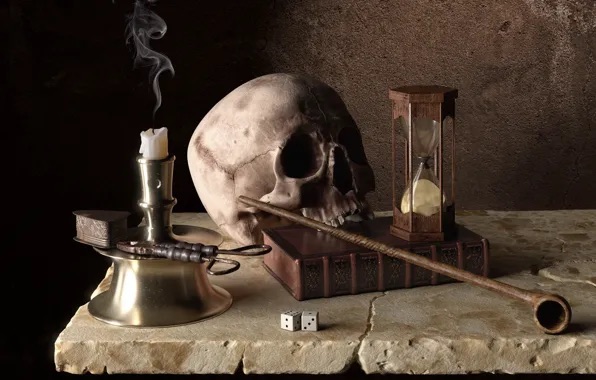
Memento Mori
Memento Mori is Latin for “Remember you must die.” I know many people don’t want to think about death and find it uncomfortable, but that’s not how I see it.
I Memento Mori so I can Memento Vivere (which is Latin for remember to live).
I remember that I am mortal, so I can Carpe Diem (which is Latin for seize the day).
Without reminding myself of the ultimate deadline (death), I find it harder to seize the day.
Memento Mori gives me the push I need to live the life God or the universe planned for me.
Compare death with submitting an essay on time
Without a deadline, you would never submit your college/ university essay.
Without reminding yourself of the ultimate deadline, death, you’ll never find the urgency to live the life God or the universe planned for you.
This is why many people experience mid-life crises: they realise they’ve been climbing the ladder of success against the wrong wall, having never stopped to choose the right ladder. There was no urgency to.
The late Psychologist Carl Jung said the following in Man’s Search For a Soul:
“About a third of my cases are suffering from no clinically definable neurosis, but from the senseless and emptiness of their lives. It seems to me, however, that this can well be described as the general neurosis of our time. Fully two thirds of my patients have passed middle age.”
These words were published in 1933, but I think we’re still struggling with the same neurosis—the neurosis of our time.
The past two years have been challenging. Having chronic wrist pain that gets in the way of your hobbies and life is difficult.
My mental health suffered, but I’m 7 weeks post-op from my last wrist surgery, and the whole situation has been a painful learning experience.
Because my mental health has suffered, yet I’ve managed to get through the worst of it, I thought I’d write an article on how to be mentally strong and fearless.
You may be wondering why I’m also including how to be fearless, and it’s because of this:
When you’re dealing with chronic pain, even waking up is enough to inspire fear in you.
Before I get to the 13 tips, I want you to remember that fear is there to protect you, but sometimes we fear things not worth fearing.
1. Do Hard Things to Build Unbreakable Mental Strength
When you see yourself overcoming insurmountable challenges, your mental strength will go through the roof.
Bodybuilder Arnold Schwarzenegger became the best bodybuilder in the world. He then became a movie star and a politician.
Achieving difficult things leads to achieving more difficult things; it’s a virtuous cycle.
What challenging task/ goal will you overcome?
2. You’ve Survived Worse Before—You Can Do It Again
List all the times you’ve overcome challenges.
When you write them down, you’ll realise “I’ve overcome difficult situations before, and I can do it again, there’s clear evidence I can.”
3. Surround Yourself With Mentally Strong People
Not everyone is blessed enough to have mentally strong people in their lives; that’s why I read autobiographies/ biographies of mentally strong people.
Some of the best ones I’ve read are:
Total Recall by Arnold Schwarzenegger.
An American Life, a biography of Benjamin Franklin by Walter Isaacson.
Elon Musk’s biography by Ashlee Vance.
4. Your Fear Might Be Rational—and That’s Okay
Not all fear is redundant. A couple of months ago, one evening, I was driving on a 60 mph road when, out of nowhere, a white car sped toward me. The driver was speeding on the wrong side of the road, which was my side of the road.
I feared for my life and made a quick decision to drive on the grass off the road. I managed to swerve to avoid the driver and was okay.
Thankfully, fear saved me from death.
5. Mental Strength Is Built Daily, Not Overnight
Like physical strength, mental strength is built day by day.
You don’t become mentally strong by sitting in front of the television watching friends.
You get it by taking on and overcoming challenges daily.
6. Real Strength Only Comes From Real Struggle
Most people think challenges test your mental strength, but they don’t; they build it.
I feel like I’ve grown so much since I developed this chronic wrist problem; when my wrist heals, I’ll feel like I’m in dreamland.
7. Develop Thick Skin and Ignore the Noise
Earlier, on one Quora post, someone said, “This post is stupid.” I replied, “Can you give me constructive feedback on why you think it’s stupid instead of insulting me and my work?’ He didn’t reply.
The truth is, no matter what you do, there will always be people who hurl abuse at you. The world has always been like this and always will be. I expect rude comments.
8. Study the Mentally Strong to Borrow Their Courage
One of my inspirations is the former UFC fighter and champion Khabib Nurmagomedov.
He’s one of the most mentally strong fighters the UFC has ever had.
Khabib grew up in Dagestan, Russia, wrestling with bears.
Here’s what Khabib says about how living a hard, tough, disciplined life breeds success.
“When you have a hard life, a tough life, success becomes very easy.”
9. We Live Easier Lives Than Any Generation Before Us
It wasn’t long ago that we had to go outside to use the loo in outhouses.
Now, with our modern-day comforts, we’re getting soft.
Life is too easy now in every way.
I often remind myself of this quote by former world champion weightlifter Jerzy Gregorek:
“Hard choices, easy life. Easy choices, hard life.”
10. Seek Intellectual Discomfort at Work
I recently wrote and published my first book, 10 Stoic Principles that Will Make You Invincible. I rechecked it about 10 times and had to make sure there were no errors. It was challenging, but I know I’m a better writer for it, and my next book will be better.
In the corporate world, I’ve constantly challenged myself, and more often than not, when you meet those challenges, you become mentally stronger and better.
11. Your Comfort Zone Is Lying to You
Lift the heavier weight (safely), and go on that solo holiday to Rome. Go diving. Whatever you’re scared of, do it.
You’ll realise your fear was imagined all along.
12. You’ll Be Forgotten—So Stop Being Afraid
One day, you’ll take your last breath. Stop being afraid. Most things are not worth the fear our minds tell us.
13. Fear Is Just an Impression—You Can Drop It
Everything changes when you realise you don’t have to be a prisoner to your thoughts and emotions, you can drop them whenever you like, just like you stopped thinking about your ex, you can stop thinking the worst and get rid of your fear.
What tip do you find most helpful?
–
Join my free weekly newsletter and receive an essay every Thursday designed to help you grow. No paywalls, just insights. Subscribe for free.
Feel free to let me know what you think about the book by either leaving a review on Amazon or emailing me at henrypaget976@gmail.com. I’m always looking for constructive feedback so I can improve.
Hello friend, Merry Christmas. I hope you have a wonderful Christmas with your family, friends and loved ones.
I want to mention the true meaning of Christmas briefly, or at least what I know.
Christmas was heavily influenced by ancient Roman culture
The ancient Romans celebrated a festival called Saturnalia to worship the Roman god Saturn, the god of agriculture and time, who ruled in the golden age. Saturnalia lasted from the 17th of December to the 23rd of December.
What was the Golden Age?
The golden age can be thought of as heaven on earth. In the golden age, Saturn’s reign was characterised by:
Peace between humans and nature.
No war.
No private property.
Equality.
The celebration of Saturnalia
People were allowed to get drunk and gamble. Everyone wore the same clothes to practice equality. People gave gifts freely, enjoyed feasts accompanied by jokes and all-around joy.
The Romans also celebrated Sol Invictus
Sol Invictus was a celebration on the 25th December to celebrate the rebirth of the sun and another cycle (because after December, the days start getting longer, and Romans saw the sun as being “reborn”).
Constantine the Great and the Edict of Milan
Constantine the Great was ruler of the Roman Empire from 306 to 337 (AD), and he issued the Edict of Milan, which granted religious freedom across the Empire.
This was a huge turning point because Christian’s had been martyred for hundreds of years, and finally Christianity was now accepted.
Constantine the Great later became a Christian himself on his deathbed.
Theodosius I and Christmas
Theodosius I was the emperor of Rome from 379 to 395 AD, and he made Christianity the religion of the Roman Empire.
Before Theodosius I, Christmas was likely practised privately.
Christmas replaced Saturnalia and Sol Invictus
During Theodosius’s reign, the church adopted the 25th December, Christmas, to celebrate Jesus Christ’s birth, and Christmas eventually replaced pagan festivals.
Pagan celebrations were popular across Rome, so it made sense for Christmas to replace them on a similar date and keep what worked, like:
Festivities, parties and celebrations.
Giving (showed God’s generosity).
Light and candles- they were used to celebrate the rebirth of the sun on Sol invictus, but now were used to celebrate Jesus’s birth (the light of the world).
Reversals of roles – During Saturnalia, slaves were free and even served by their masters. At Christmas, helping the poor and looking after the most lowly is still important (think of helping in soup kitchens on Christmas).
Christmas developed, but this remained
Initially, Christmas was celebrated in churches, and it has since developed in many different ways.
What remained was that Christmas still celebrates Jesus Christ’s birth, feasting, music, lights, giving, and overall jolliness.
Saint Nicholas of Myra (the original Santa Claus)
In the 4th century AD Saint Nicholas was a wealthy bishop from Myra (now called Demre), in Turkey.
Three impoverished sisters were about to be sold into slavery.
Nicholas of Myra paid their dowries so they could seek husbands and marry.
The true meaning of Christmas:
To give to the people who really need it. Not to go wild in extravagance.
–
Enjoy my content? Click here to subscribe to my newsletter and receive a free weekly essay. I don’t offer paywalled content (but you can support my work).
I’ve struggled with anxiety and worry for a while, and I’ve not completely conquered them.
But I have got much better at minimising how much anxiety and worry I feel. Here are my top 7 tips.
1. Will This Even Matter in 10 Years?
Recently, I’ve had wrist surgery for the second time in a year, and fingers crossed, hopefully my wrist is fixed for good.
Although I’m currently in a wrist splint, so I won’t know until I start using my wrist properly.
In a worst‑case scenario, suppose my wrist isn’t fixed properly again. I’m confident it will be corrected over time because the first surgery fixed the major issue, and this second surgery has fixed another issue caused by the initial injury.
So I tell myself, with this wrist pain, will it matter in 10 years? And the answer is no. It shouldn’t even matter in a year if everything goes to plan.
Our minds tend to make problems much worse than they are.
Don’t fall into the worry trap.
By putting our worries and anxieties into perspective, we can diminish most of them. So if what you’re worrying about now won’t matter in 10 years, don’t worry about it.
2. Accept What You Can’t Control
In our lives, we have control of some things and little control over others.
For example, I write a lot on Quora, and many people leave positive comments on my answers, but some are downright rude and nasty.
I know that no matter what I do in life, I’ll get haters; it’s the same for you.
Ultimately, we can’t control people’s opinions about us.
But we can live up to our own standards.
And that’s the saner thing to do.
“Do what you can, with what you have, where you are.” – Theodore Roosevelt
3. Worry Lives in the Future — Stay Present
Last year, during my first wrist surgery recovery, I kept projecting myself into the future, worrying, “What if my wrist isn’t fixed? What if something went wrong?”
And this caused a gut-wrenching feeling of worry about what might happen in the future.
The worry was getting out of control, so I started a box breathing routine, which helped me stay present and avoid getting caught up in worrying about the future.
Remember, most worry and anxiety are about all the million things that may happen in the future.
If you can become aware of the present moment by box breathing, or slow, relaxed breathing, all your worries will pretty much vanish.
Going on walks is great for this.
4. Plan for the Worst, Expect the Best
The ancient Stoics would keep in mind the bad that can happen ie a parent’s death, your own illness or mortality.
But they wouldn’t worry about it. They’d merely keep these things in mind so that if they happened, they wouldn’t be struck dumb by them.
It’s good to be aware of what Lady Fortuna can do. But don’t be so affected that these worst-case scenarios cloud your judgment.
In philosophy, there’s a concept called Memento Mori, which means ‘Remember that you must die’ in Latin.
This insight isnt there to make you feel depressed. It’s there to make you realise that life is short and that you need to make the most of life right now.
Remember the phrase Carpe Diem, which means ‘seize the day’ in Latin.
5. Live by Strong Principles
When the ancient Stoics felt worry, anxiety, or went through a challenging time, they would use those moments to practice virtues.
For example, because I’m recovering from wrist surgery right now, Stoics would say that’s a great chance to practice self-control and patience.
I practice self-control by staying calm, as it’s easy to get overwhelmed and upset when injured.
I practice patience because ultimately I’ve had surgery and can’t do anything about it. My wrist surgery is done, and the outcome is beyond my control, so I won’t waste time worrying about it. All I can do is trust the surgeon and be patient.
6. Check the Odds Before You Panic
I think I’ve written about this before, but I used to have terrible health anxiety.
As a kid, I used to get painful recurrent headaches until my teens.
The headaches wouldn’t go away, so I had medical tests, and I was labelled fine by doctors.
I was fine, but due to my health anxiety, I thought I had a brain tumour that was going to kill me.
I remember talking with a doctor when I was a teenager.
The doctor told me that my medical tests were fine and that the chances of me being sick with a brain tumour were minuscule.
This experience taught me to be rational about my worries.
7. Focus Outward, Not Inward
Most of my worries come from overthinking and not being present in the moment.
As a rule of thumb, focusing inwards, getting tangled up in negative thought patterns, and what-if scenarios causes pain.
But focusing outward, i.e. on hobbies, helps me become fully immersed in something else, so I lose track of time and my negative thoughts.
This is one of the reasons I write.
I’ll give you an analogy.
If you have a dog, you’ll know they turn into lunatics when they can’t go for walks. So they run around the house barking.
Yet when you take your dog for a walk and play fetch, the dog is in his element.
We are the same when we engage in hobbies that we enjoy.
Negative thoughts and feelings vanish.
—
Timeless wisdom to help you grow—straight to your inbox each week. Click here to subscribe (It’s free).