I’ve started working out three times a week (doing full-body workouts )and going on daily walks. I get 80–90% of my calories from whole foods. I’m also staying hydrated and prioritising getting good sleep every night ( 8 hours is best).
Intellectual goals- I’m trying to improve my intellect so that I know more and can do more. When we know more and can do more, we’re more useful in general. Nothing bad can occur from improving your mind.
Spiritual goals: I’ve started a meditation practice where I meditate 2 x 20 minutes per day focusing on my breathing. It’s helping me become more calm, patient and I’m getting less caught up in my mind.
Monetary goals: I always try to take on more responsibility in my day job. This builds my skills and helps develop my character. Doing difficult things is great for us; I also save and invest 20% of my income each month, which will hopefully give me financial freedom in the long run.
Even when trying to be the best version of yourself, you’ll experience setbacks. They’re part of life.
Just like you get hot and cold days, realise you get good and bad days, and they’re both sides of the same coin. Realise that this moment will pass, and the further you go through a bad patch, the closer you are to the good times.
Try not to let the bad times affect you too much, and the same for the good times. They’re both part of life.
Another strategy to make you feel better is to, direct your energies toward something you enjoy, i.e. a hobby.
This will help you through those dark times in your life because most people experience enjoyment when they engage in hobbies. When we experience joy, we tend not to think about things that are not going well in our lives.
We all experience bad times, and just knowing this fact doesn’t make it any easier, but just hold in there, and you’ll get through it.
I like this analogy:
“To be like the rock that the waves keep crashing over. It stands unmoved and the raging of the sea falls still around it.” – Marcus Aurelius.
We need to be like this when life gives us its worst.
You should sleep roughly the same time every night, give or take an hour. For example, if you go to bed at 10 or 11 p.m., you should get up at 6 or 7 a.m.
Wind down with a book or something else, such as a board game or even tidying your house, so you won’t be staring at screens before bed ( the bright light from screens keeps you awake).
Having a warm shower will relax your muscles and mind, helping you have a restful sleep.
Do not eat too close to going to bed. Try not to eat for 1 or 2 hours before going to bed. No one likes going to bed bloated.
Don’t drink lots of water before bed. Stop drinking an hour before bed so that you won’t wake up like an old man to pee at 3 a.m. in the morning. Try to get most of your water intake during the day and evening so you’re well-hydrated before bed don’t chug all your water intake at night
Don’t drink alcohol before bed. Or at least limit the amount you drink. It’s known alcohol makes you fall asleep faster, but the overall quality of your sleep is much worse, and you wake more frequently. Alcohol also dehydrates you, and this can diminish your sleep quality.
Don’t exercise too late at night. Ideally, try working out in the morning or afternoon. If you must, work out in the evening, but not one or two hours before bed. Otherwise, your adrenaline will be high, negatively impacting your ability to fall asleep. When I work out at night, I find it very hard to sleep.
Don’t drink caffeine before bed. Try to drink all your caffeine as early in the day as possible. I try not to drink caffeine after noon. This means that by the time I lay down to rest, the caffeine is out of my system.
Don’t smoke before bed. Nicotine, like caffeine, is a stimulant and will keep you up at night.
Write down five things you’re grateful for and tick off your to-do list. There’s no better and more comforting feeling than completing your goals for the day. It’s the only way to get to our idealised selves, and we can only do it one day at a time. Being grateful for the small things is a cheat code to life, you instantly become happy.
Brushing your teeth, this is a no-brainer.
Clean your kitchen. I hate going to bed knowing I’ve forgotten to do my dishes or spray down the surfaces. For me, going to bed with a clean kitchen means going to bed with a clean mind.
One easy hack is to use lamps at night on their lowest possible setting rather than have your main lights on. Your body prefers a dark environment at night as you get closer to bed time due to your circadian rythm (natural body clock). The picture below is me now in a darkish environment winding down for bed.
The Importance Of Good Sleep Hygiene And night Time Habits
If you follow the above advice, it should help massively. I know it has helped me a lot.
Good sleep hygiene and nighttime habits are vital for living a happy, enjoyable life.
We spend about one-third of our lives sleeping, or about 26 years. This is equivalent to 227,916 hours.
Just like we need to get our wakefulness right, we need to get our sleep right.
We always focus on:
I must do this; I must do that.
I’ll go here.
I’ll go there.
But how many of us stop and think:
How can I improve my sleep routine?
Unfortunately, not many of us do.
And if you ask yourself that question.
Great, you’ve taken the first step.
Now, focus on the advice above and get to work.
Some Additional Helpful Habits
Get a massage from your spouse or give him/her one. It feels great to get a massage, and it feels great to give someone else one. We humans are givers; we generally feel good knowing that we’re helping someone else feel good.
Listen to classical or calming music. This will relax your body and mind.
Light a candle; pleasant smells can help relax and calm us.
Do some deep, slow breathing. This will slow your heart rate and trigger your parasympathetic nervous system, which is the rest and digest nervous system rather than the fight-and-flight one. This is extremely relaxing.
Meditation is another way to relax your body and mind. It helps prevent you from getting lost in your thoughts and instead immerses you in the present moment, which is deeply satisfying. To meditate, you can either focus on your breath for 5-10 minutes while sitting in a cross-legged position with your eyes closed or take the same posture and repeat a mantra for 5 minutes, e.g., “Ohm” (this type of meditation is called transcendental meditation).
Good nighttime habits enable us to sleep at a time we like so we can get up early and seize the day.
Benjamin Franklin said “Early to bed and early to rise, makes a man healthy, wealthy, and wise”.
To not try is to live authentically, tap into the energies of your soul and pursue a life you truly want.
Please don’t do things for praise or esteem; we need to do things because we’re internally driven to do them. If we’re internally driven, we’re far more likely to succeed.
Think with your heart over your mind. Your heart tells you the truth. Get in touch with your intuition.
Don’t Try.
The late Charles Bukowski wrote many books, including Post Office and Ham on Rye.
Throughout his life he worked mediocre jobs but always wanted to become a writer.
It took him decades to get a book published.
But throughout his life he consistently would sit down and write.
His secret was the fact that he didn’t try.
Charles lead his life by following the don’t try mantra.
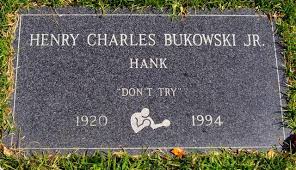
So much so that he had the words “don’t try” put on his headstone.
I believe the secret to life is not to try.
It’s the ultimate truth.
It doesn’t mean we need to be lazy.
It means we must live authentically and pursue lives we’re drawn to.
Take writing, for instance. I love it and always feel better after writing.
I don’t get paid for it; I do it out of love.
Or, take working out. I always feel great afterwards, and I do it for its own sake. I never have to try.
This advice isn’t easy to follow primarily because we live in a materialistic culture seeped in philistinism.
We’re told to keep up with the Joneses, make more money, get a better car, and max out our credit cards.
Last year, I lived a life I hated. I compared myself to others and tried to improve my status in the hierarchy.
At the expense of my own happiness.
What happened was I killed myself doing overtime, gave all my time to a girlfriend who didn’t care about me and above all, I was trying extremely hard for nothing.
When we try at life, we’re trying for someone else dreams, not our own.
If we truly love something and want our lives to be a certain way, we’ll naturally gravitate towards what we want out of life.
But the biggest thing I want you to take away from this is:
Whatever you do, don’t get in your own way.
Life is very easy, but our minds make it more complicated.
In reality we need to get in touch with our true selves.
And then life won’t feel like an uphill battle. Because when we love our lives, we don’t try.
Why would you try to love your life?
You either love it or you don’t.
And trying makes you aim for something external. Something false.
The truth of life:
We need to live a life we love so much that if someone forced us to live our lives, we’d bite their hand off.
Below is a picture of Charles Bukowski’s “ don’t try” headstone.
Think With Your Heart More Than Your Head
In the book Man In Search Of A Soul By Carl Jung, he writes about a time he spoke with the Pueblo Indians, and they told him that:
“Americans were mad because they believed their thoughts were in their heads, whereas any sensible man knows that he thinks with his heart”.
To not try means to be in touch with our intuitions, our hearts, and God.
The Concept Of Dukkha
In Buddhism, Dukkha is the concept of dissatisfaction, suffering, or imperfection.
It’s a natural part of life.
And it arises in the mind.
You and I will experience Dukkha.
But if we can think with our hearts rather than our minds and be in touch with our authentic selves.
Then, we can limit the amount of Dukkha we experience.
But whatever you do, don’t get caught in your mind.
Detach.
And embrace Bukowski’s don’t try philosophy.
Start today.
Takeaways:
To not try is to live authentically, tap into the energies of your soul and pursue a life you truly want.
Please don’t do things for praise or esteem; we need to do things because we’re internally driven to do them. If we’re internally driven, we’re far more likely to succeed.
Think with your heart over your mind. Your heart tells you the truth. Get in touch with your intuition.
“Life really does begin at forty.Up until then, you are just doing research.” – Carl Jung
Key Takeaways
During our youth and early adulthood, we’re bound to make mistakes. For many, it’s not until we reach the ripe age of our 30s or 40s that we have enough life experience to really know what we want out of life.
To begin living as early as possible, we need to become readers. Readers are leaders, and books teach us how to live and not live.
To not waste time and to begin living now, engage in habits that can only cause positive results in your life. For example, working out, reading, tidying your house, eating healthily, writing, having a good sleep routine, etc. If you fill your life with only positive habits, you’re more likely to get the most out of life and not waste it. Your time would have been spent effectively.
At 26, I’ve realised that no one knows what they’re doing.
Most people act out a facade to portray that they’ve got their Sh!t together.
Almost no one has.
I believe Carl Jung was right when he said life begins after 40 ( never mind 30, and there is much to gain from our life from birth to the grave).
Wisdom is an ever-moving goal. We are lucky if we ever obtain even a mere helping of it.
Also, be very careful when people claim to have things “figured out”; no one does. The same shoe pinches another, and there is no recipe for living that suits all cases.
I believe our lives begin when we experiment throughout our lives, following our curiosities and passions and seeing where they take us.
As a kid, I used to think adults had it figured out. I thought they were much brighter and wiser than I was, and I needed to listen to them.
Now, as an adult myself, I know this is untrue. We’re all flawed.
Youth’s Wasted On The Young
Hindsight is a wonderful thing, and looking back towards the earlier parts of our lives, we feel like we could have done things better because none of us goes through life doing things perfectly.
How Not To Waste Time And Get The Most Out Of Life
To avoid wasting your life, we first need to define a wasted life. I describe it as a life full of bad habits that aren’t helpful for you or anyone.
This includes habits such as:
Drinking, smoking, watching porn, binge-watching tv. Essentially, it is anything that causes a net negative to your life.
In contrast, if you swap these habits for things like working out, reading, tidying your house, eating healthily, writing, etc., these habits can only benefit your life.
If you stick with good habits over the course of your life, they have a synergistic effect and will help you become a productive, effective person.
Readers Are Leaders
I believe the best way to avoid wasting time is to look into the lives of others and read broadly in general. By learning about others, we can understand what to do and what not to do in our lives to live effectively.
The more we know, the more we can do, and the more we can do, the more opportunities we have to succeed in life.
The less we know, the more likely we are to repeat others’ pitfalls, whereas if we educate ourselves, we may be able to avoid the many pitfalls life has to offer.
Reading can teach you how to live and how not to live. Both are extremely important.
Takeaways
During our youth and early adulthood, we’re bound to make mistakes. For many, it’s not until we reach the ripe age of our 30s or 40s that we have enough life experience to really know what we want out of life.
To begin living as early as possible, we need to become readers. Readers are leaders, and books teach us how to live and not live.
To not waste time and to begin living now, engage in habits that can only cause positive results in your life. For example, working out, reading, tidying your house, eating healthily, writing, having a good sleep routine, etc. If you fill your life with only positive habits, you’re more likely to get the most out of life and not waste it. Your time would have been spent effectively.
Marcus Aurelius says in meditations: If, at some point in your life, you should come across anything better than justice, honesty, self-control, courage—than a mind satisfied that it has succeeded in enabling you to act rationally, and satisfied to accept what’s beyond its control—if you find anything better than that, embrace it without reservations—it must be an extraordinary thing indeed—and enjoy it to the full.
The key isn’t to be perfectly stoic all the time. It’s to turn to stoicism when life tests us and to live life in a virtuous way ( practicing virtues) because this will benefit us and everyone around us.
We’re not perfect and I’m sure that Marcus Aurelius, Seneca and Epictetus weren’t either. But as long as your trying your best to live life in a virtuous way and actually practicing philosophy rather than just reading about it, then you’ll reap the rewards.
In this brave new world, finding love is as desirable as ever. But it’s much different from when people dated in the 20th century. Some say it’s better, and some say it’s worse, but either way, I believe that modern dating is just like sales.
Here’s why:
When you date (especially usually dating apps), you are in a dating pool, and your job is to get warm leads, for example, 100; from those 100, you may only be interested in 10, and from those 10, you may find your one unicorn. But to find the one, we need to increase our leads.
Modern life is as competitive as ever. In order to find the best spouse, we need to be the best people we can be. Otherwise, we settle for someone who is well below our standards and, alas, get a divorce.
The state of culture makes finding the right person harder, and being able to sell ourselves is vital for finding the right spouse.
Because of social media, everyone compares, so if you aren’t up to a decent standard, there are many others out there. If we can sell ourselves better than anyone else, this puts us in a position of power.
Now, we’ll dive deeper into these reasons.
1. Dating Is A Numbers Game
In the past two relationships, I found my ex-partners on dating apps. Here’s how the process started: I got x number of matches, went on dates, and found my previous girlfriends.
My mistake was selling myself to the wrong partners. We must sell ourselves to only the people we want to be with, not just anyone.
This is a hard idea to grasp, especially for those who grew up with television, because normally, the guy and gal meet each other in school or college, fall in love, and then are happily married and have a family.
I thought this would happen to me. If I found someone who was generally a good person and we loved each other, then we could make it work. (As a side note, only 1/4 of first-time relationships last.)
I was wrong. Now, I believe a successful relationship with a spouse is about having three things: heaps of trust, compatibility, and love.
Love isn’t enough by itself, and it never will be.
When you’re in the dating pool, it’s very important to be picky about who you choose to be your spouse.
The most important lesson from my previous failed relationships is to be very picky and not commit too soon. Try before you buy.
It doesn’t matter if you need to go on 100 dates. If you’re going to make the decision to be with someone for the rest of your life, you need to be wholly committed.
2. Be Competitive
In this competitive world, everyone is looking for more out of their relationships. It’s extremely important to constantly improve ourselves. If you’re not improving yourself already, start now.
Over the months and years, you’ll evolve to be an even better, more effective, and successful person, and you’ll attract spouses you generally want to be with. Don’t just settle because you’re ‘lonely’. One-third to half of all marriages fail.
The truth is we need to be very careful before we commit to a life partner.
3. Navigating Dating In Our Culture
Culture makes it more difficult than ever to find the right spouse. In the twentieth century, you’d meet your spouse in a pub or in the local community. Everyone was much more social, and the culture had more traditional Christian values.
In this Brave new world, finding the right spouse is like looking for a needle in a haystack.
4. Be Competitive But Avoid The Comparison Trap
The Comparison trap—Everyone uses social media, and the “grass is always greener” mentality is common.
On my dating journey, I’m trying to find genuine and authentic spouses who aren’t addicted to scrolling on social media 24/7. It’s literal junk food for your brain.
Make Sure You’re Not A Simp ( My Story Of Being A Simp)
I was in a relationship with Jenny. I met her on the dating app Hinge, and we dated for a couple of months. After I begged her to go out with me, she did, although I didn’t think she wanted to.
We were in a relationship for around a year; I constantly said I loved her, bought her flowers, and got her nice presents for birthdays and Christmas (spending far too much). Our sexual life was nonexistent.
She reciprocated almost zero love for me. Now, it’s clear to me that I was undoubtedly a simp, but I didn’t know it at the time.
Before getting into a relationship with Jenny, I read a popular book called The 5 Love Languages by Gary Chapman, and one of the five love languages described was receiving gifts (so I bought her gifts constantly as she seemed to like them).
I also took a quote from the book: literally, the quote was:
“But to you who are listening, I say: Love your enemies, do good to those who hate you, bless those who curse you, pray for those who mistreat you…. Do to others as you would have them do to you. If you love those who love you, what credit is that to you? Even sinners love those who love them.” Luke 6:27-31 (from the bible).
So, even though she wasn’t reciprocating my love, I thought, “If I keep showing her how much I love her, no matter what, she has to love me back.”
Oh, I couldn’t have been more wrong. In this relationship, I lost my sense of self-respect. Driving back from London (we’d been on a road trip), she said to me when we were talking about money, “You could spend more on me; I am your girlfriend,” even though she was showing me no love.
She went to Thailand to visit family for 2 weeks and returned, and she ended the relationship without seeing me. I was distraught because I had given her my all for a year.
The lesson I’ve learned is don’t be a simp and only get in a relationship with someone who truly respects you and treats you like you want to be treated.
Relationships only work when they’re reciprocal. You harm yourself by acting like a simp.
Most people don’t want to be in a relationship with someone who acts like a simp primarily because it’s inauthentic.
As a note: Jenny isn’t her real name; it’s a pseudonym to hide her identity.
The Bottom Line On Why Dating Is Just Like Sales
Put yourself out there, increase your dating pool, become the best person you can be, be picky, and don’t settle for someone who isn’t right for you.
Realise that love isn’t enough. When choosing your life partner, you need to be wholly committed. Is it a f$ck yes or a f$ck no to the relationship? But whatever you do, don’t be a simp.
Do you agree with my article on why dating is just like sales? What do you think? Let me know by commenting below. Please press the like button if you found it helpful.
To be notified when I write articles, subscribe to my substack.
Do you want to build a habit? It could be anything from working out to reading to playing chess. Does the act you need to do seem gruelling? If so, here’s what you can do to kickstart the habit.
Make a commitment to do it for 5 minutes. Once you get going, you’ll find that you can do and achieve way more than you initially thought.
The key to making habits stick is making them easy. It’s much easier to commit to doing a task for five minutes than it is for several hours.
An alternative to this that provides similar results is performing the minimum viable effort.
Here’s how it works regarding working out.
Go to the gym and perform your warm-ups and your first exercise. Your blood will pump, your endorphins will flow, you’ll be listening to your favourite music, and all will be right with the world, so you’ll continue and complete a full workout.
If you’re trying to get in the habit of writing, you might set a small goal of writing 300 words. If you’re trying to get in the habit of reading, you may want to start by reading a couple of pages.
This trick has especially helped me improve my chess skills. Most days, I try to commit to learning one chess lesson and then a five-minute game of speed chess. Now I know how all the pieces work, and I’m starting to win games.
Start small, start easy, and you’ll be surprised with what can add up over the months and years.
From November 2023 to November 2024, I went a year without alcohol; it was interesting, to say the least. In this article, I will share how I found the experience.
Before starting this experiment, I wasn’t a heavy drinker but was probably drinking at least weekly or, if not twice per week. A drink was a drink; I didn’t think anything of it.
But then I realised how much I was spending on alcohol, and I listened to Dr Andrew Huberman’s podcast on alcohol. I was concerned, to say the least; I believe Dr Huberman noted that even having a couple of drinks per week can negatively affect your health.
I can’t remember exactly what he said, but It was frightening.
I don’t judge anyone for drinking, and I’ve probably been drinking since I was 16. In England, drinking culture is quite the thing. Heres what I found when I quit drinking.
1. Hangovers Where A Relic Of The Past
For me, this was the best benefit. I hate hangovers with a passion. With hangovers, I get moody and irritable and just turn into a horrible person.
I could say that I became much more productive. Unfortunately, this isn’t true; I was Nursing a wrist injury throughout the entire year that I stopped drinking and was in a very difficult relationship that I’m now out of.
But hey, ho, no hangovers were great.
2. I Saved And Invested More Money Than Ever
By not going out drinking, I wouldn’t spend money buying food or other things I may have previously bought while being “out on the drink”.
This allowed me to save more money in my general savings account and invest more in index funds.
3. I Spent More Time With My Ex-girlfriend
This wasn’t that great; we ultimately drove each other insane and split up. Honestly, she is probably part of the reason I stopped drinking. She was highly needy and possessive and, unfortunately, tried to stop me from going out with my friends.
4. I Got Sick Just As Much As Normal (probably more)
Before I started this experiment, I thought I’d turn into Wolverine or something by the 1-year mark. This wasn’t the case; alas, I’m still human.
5. I Didn’t Miss Alcohol
I can honestly take or leave alcohol. Some beers are pretty pleasant. I do enjoy a good German wheat beer. But honestly, I didn’t get the craving for alcohol. This is probably because most alcoholic beverages in the United Kingdom taste like mouldy urine.
If it weren’t for me going to my best friend’s stag do in November, I still probably wouldn’t have had an alcoholic drink.
6. My Sleep Didn’t Change
If you look at the benefits of going completely sober, one of the main benefits is better sleep. Honestly, it didn’t make a difference to me.
7. Going Without Alcohol For A Year Is Overrated
For the most part, I think everything you watch and read online is sensationalised, and you wouldn’t click on these influencer’s articles or videos about giving up alcohol if the results were mediocre.
The Bottom Line On A Year Without Alcohol
If you’re someone like me who hasn’t really got a problem with alcohol, going a year without it probably won’t make much of a difference to how you feel. But if you have alcoholism, I think the benefits will be dramatic. I’ve been an idiot on occasions when I’ve been drunk, maybe a handful of times; I think I took this to heart and thought it meant I had a problem; in reality, I don’t. But we’ll see what my psychologist says.
On a cold autumnal morning in November 2023, I got out of bed, got dressed, hydrated, had my pre-workout meal, and drove to the gym to complete a pull day workout consisting of deadlifts, rows, weighted chin-ups and barbell curls.
The workout went fine until I started performing my work sets of weighted chin-ups.
The gym was busy, and I couldn’t use the regular pull-up bar because they were all occupied.
So, I had to use the monkey bars to perform the weighted chin-ups.
I was already warmed up from the previous exercises, so I went straight into the work sets. I had a belt tied to my waist with a chain on, and attached to the chain was a 15kg plate.
I was doing chin-ups with my body weight and 15kg attached, so the total weight lifted was around 95kg because I weighed around 80kg (80kg + 15kg = 95kg).
I grab the pull-up bar with both my hands and the 15kg weight plate attached and start repping out chin-ups; my goal is to hit 4-6 reps for three sets.
While performing the first several reps, I felt an uncomfortable pull in my wrist and stopped the exercise.
My wrist was painful, and it felt unstable, but it wasn’t excruciating ( maybe a 6/10 in regards to the severity of the pain).
After experiencing this, I rest and try again. It still doesn’t feel right, so I perform dumbbell curls. They didn’t feel right either.
I go home, shower, get dressed, start working, and get on with my day. A couple of days later, I tried to perform my leg workout, but gripping the bar for barbell squats didn’t feel right, and I realised there was a serious problem with my right wrist (to make things worse, it was my dominant wrist).
So, I gave myself a 2-week break from the gym.
After the 2 weeks were up, the pain was still there, but I tried to go back to lifting, thinking, “Maybe my wrist is weak after the injury and needs to be strengthened”, so I tried to train for a few weeks.
The pain was still there.
I then saw my general practitioner (GP) at the local doctor’s surgery centre, and he gave me a wrist splint to wear for a few weeks.
It didn’t help.
A few weeks later, the GP authorised an ultrasound for me on my wrist. When I had the ultrasound, the doctor couldn’t find a cause for my pain; he said, “It’s probably just mild tendonitis”.
I gave my wrist more time to heal, then saw a physiotherapist to help me with correctional exercises, hoping this would fix the problem.
Nothing helps.
I wait several more months, then see an orthopaedic surgeon who requests an MRI scan of my wrist.
He finds no cause for my wrist pain on the MRI and tells me to start using my wrist as usual again.
I couldn’t deal with the pain any longer, so I asked him to refer me to a soft tissue wrist specialist.
I went to see the specialist, and he gave me a steroid injection in my wrist, hoping to reduce any inflammation in my wrist that might have been causing the pain.
It didn’t work.
The next option was wrist keyhole surgery to find a cause for my wrist pain (and hopefully fix my wrist) because the specialist said MRIs could only be 70% correct, meaning my diagnosis had probably gone undetected so far.
In December 2024, I was put under general anaesthetic and had my wrist surgery.
The surgeon found a Triangular fibrocartilage complex (tfcc) tear and repaired it the operation lasted around 2 hours.
As of writing this article, I’m almost 9 weeks post-op, and my wrist is improving.
Don’t Get Injured
Why did I develop the injury? It’s because of a few factors.
I was getting back into weighted chin-ups after a period of not doing them and added too much weight too quickly.
My weighted chin-up form could have been better. I was in a rush the day I got injured and was going through the motions.
It was a cold morning, and I should have warmed up more before performing the weighted chin-ups. I should have performed 2- 3 sets of 6 reps of bodyweight chin-ups before doing my work sets. This would have warmed up my wrist joints, reducing the likelihood of sustaining the injury.
What I’m Going To Do Moving Forward
I won’t do pull-ups or chin-ups anymore (definitely not weighted ones). Instead, I’ll use the lat pulldown exercise and focus on perfect form. I’ll use a full range of motion. The lat pulldown is as effective as the chin-up as it targets the same muscles as you do in the chin-up.
What You Can Take Away from My Experience
Warm up properly before completing any heavy sets.
Always use perfect form. Always use a full range of motion, and don’t use momentum. Your muscles are supposed to do the work (this is true for every exercise, even a bicep curl).
You know your body better than anyone. See a specialist if you face an injury like mine as soon as possible. I unfortunately wasted a year of my life experiencing this chronic pain.
This Experience Was One Of The Most Challenging Of My Life
Albert Einstein said, “The definition of insanity is doing the same thing repeatedly and expecting different results”. I spun my wheels for over a year. Truth be told, I was going insane before I got my surgery.
Your health affects every aspect of your life; to be injured is to be in poor health. Injuries will make everything in your life harder. We don’t need that; life’s already hard enough.
The Big Problem With Fitness Culture
Many people, especially guys, want to be as big and strong as physically possible. They’re constantly drip-fed images of bodybuilders on their Instagram feeds, which undoubtedly makes men feel inferior to “fitness influencers” regarding physique and strength.
What happens (or what happened to me)? I would compare myself to these guys and try to get as big and strong as possible (it’s not possible for a natural weightlifter to get as big and strong as these “fitness influencers” who take steroids).
This led me to ignore my health and, instead, to lift as much weight as possible.
I’d slam down 4000 calories daily when bulking and “go hard or go home” at the gym (I’m surprised I didn’t experience more injuries, especially when I first started going to the gym).
I’m among the lucky ones.
I hear shocking stories about gym culture on social media (predominantly YouTube). People are dying in the name of strength training.
Firstly, you have the bodybuilders on steroids who are so big their hearts literally can’t handle pumping the blood around their bodies, and then these guys prematurely die of heart attacks.
If you haven’t heard what happened to Justyn Vicky, he died doing heavy back squats ( warning: this video is deeply distressing). He was only 33 when he died. That’s no age, and the whole situation is deeply tragic.
It’s worth noting that Kristina Schmidt a 24-year-old personal trainer snapped her hip in half after doing heavy hip thrusts. She had to have surgery and, unfortunately, after surgery, got a bacterial infection, which was life-threatening.
Gabriel McKenna-Lieschke from Adelaide, Australia, was performing bicep curls with a 50kg weight and tore his bicep, resulting in him needing surgery, which then caused complications and his forearm required to be amputated.
Scott Murray, who developed an eating disorder around his fitness routine, took it so far that he eventually died of heart failure; Scott Was unfortunately only in his 20s when he passed away.
When Did Becoming Healthy Get So Unhealthy
The goal of strength training shouldn’t be to lift as much weight as possible; it should be to consistently keep your joints, bones, tendons and ligaments strong for the rest of your life.
In short, you need to become a lifter, which can only be achieved by consistently going to the gym. I recommend going around 3 times per week.
To become a lifter, you need to be consistent. You can’t become consistent if you’re injured. So, the one thing we need to avoid when strength training is injury.
How Do You Know When The Weights Are Too Heavy?
When you can’t perform a full range of motion for the exercise.
If you start using momentum when the weight gets heavy. You need to use your muscles, not momentum.
When your form breaks down, for example, your back rounding when deadlifting or squatting or your shoulders rolling forward in the bench press.
When you literally couldn’t have completed another rep with good form. Leave two reps in reserve (stop the set when you feel you could have done an extra two reps with perfect form) at the end of every set. Perform all reps flawlessly.
The Bottom Line
Please take what you can from my injury experience, warm up properly, don’t lift too heavy too soon, and always use the full range of motion. Your main goal in strength training (even more critical than getting stronger) is not to get injured. If you get hurt, your whole life will change for the worse. Life is too short to be in pain for a year like I was. Please listen to what I’m saying here. I would hate for you to go through a similar experience. Also, remove yourself from the toxicity of fitness culture if you can. I know removing myself from social media helped me. People are killing themselves in the name of “gains”. Health should always be the top priority. If anything you do compromises your health, you’re doing the wrong thing.
The first picture at the top of the article is me before going into theater for surgery in my hospital gown.
The second picture is a couple of days after surgery. As you can see, I’m wearing a plaster cast.
Over the past year, I’ve suffered from a chronic wrist injury from lifting weights. In this article, I want to use my experience as a springboard to ensure you know how to not get injured lifting weights.
This is my story.
On a cold autumnal morning in November 2023, I got out of bed, got dressed, hydrated, had my pre-workout meal, and drove to the gym to complete a pull day workout consisting of deadlifts, rows, weighted chin-ups and barbell curls.
The workout went fine until I started performing my work sets of weighted chin-ups.
The gym was busy, and I couldn’t use the regular pull-up bar because they were all occupied.
So, I had to use the monkey bars to perform the weighted chin-ups.
I was already warmed up from the previous exercises, so I went straight into the work sets. I had a belt tied to my waist with a chain on, and attached to the chain was a 15kg plate.
I was doing chin-ups with my body weight and 15kg attached, so the total weight lifted was around 95kg because I weighed around 80kg (80kg + 15kg = 95kg).
I grab the pull-up bar with both my hands and the 15kg weight plate attached and start repping out chin-ups; my goal is to hit 4-6 reps for three sets.
While performing the first several reps, I felt an uncomfortable pull in my wrist and stopped the exercise.
My wrist was painful, and it felt unstable, but it wasn’t excruciating ( maybe a 6/10 in regards to the severity of the pain).
After experiencing this, I rest and try again. It still doesn’t feel right, so I perform dumbbell curls. They didn’t feel right either.
I go home, shower, get dressed, start working, and get on with my day. A couple of days later, I tried to perform my leg workout, but gripping the bar for barbell squats didn’t feel right, and I realised there was a serious problem with my right wrist (to make things worse, it was my dominant wrist).
So, I gave myself a 2-week break from the gym.
After the 2 weeks were up, the pain was still there, but I tried to go back to lifting, thinking, “Maybe my wrist is weak after the injury and needs to be strengthened”, so I tried to train for a few weeks.
The pain was still there.
I then saw my general practitioner (GP) at the local doctor’s surgery centre, and he gave me a wrist splint to wear for a few weeks.
It didn’t help.
A few weeks later, the GP authorised an ultrasound for me on my wrist. When I had the ultrasound, the doctor couldn’t find a cause for my pain; he said, “It’s probably just mild tendonitis”.
I gave my wrist more time to heal, then saw a physiotherapist to help me with correctional exercises, hoping this would fix the problem.
Noting helps.
I wait several more months, then see an orthopaedic surgeon who requests an MRI scan of my wrist.
He finds no cause for my wrist pain on the MRI and tells me to start using my wrist as usual again.
I couldn’t deal with the pain any longer, so I asked him to refer me to a soft tissue wrist specialist.
I went to see the specialist, and he gave me a steroid injection in my wrist, hoping to reduce any inflammation in my wrist that might have been causing the pain.
It didn’t work.
The next option was wrist keyhole surgery to find a cause for my wrist pain (and hopefully fix my wrist) because the specialist said MRIs could only be 70% correct, meaning my diagnosis had probably gone undetected so far.
In December 2024, I was put under general anaesthetic and had my wrist surgery.
The surgeon found a Triangular fibrocartilage complex (tfcc) tear and repaired it the operation lasted around 2 hours.
As of writing this article, I’m almost 9 weeks post-op, and my wrist is improving.
How To Not Get Injured Lifting Weights – Don’t Get Injured In The First Place
Why did I develop the injury? It’s because of a few factors.
I was getting back into weighted chin-ups after a period of not doing them and added too much weight too quickly.
My weighted chin-up form could have been better. I was in a rush the day I got injured and was going through the motions.
It was a cold morning, and I should have warmed up more before performing the weighted chin-ups. I should have performed 2- 3 sets of 6 reps of bodyweight chin-ups before doing my work sets. This would have warmed up my wrist joints, reducing the likelihood of sustaining the injury.
What I’m Going To Do Moving Forward
I won’t do pull-ups or chin-ups anymore (definitely not weighted ones). Instead, I’ll use the lat pulldown exercise and focus on perfect form. I’ll use a full range of motion. The lat pulldown is as effective as the chin-up as it targets the same muscles as you do in the chin-up.
How To Not Get Injured Lifting Weights – 5 Steps For Injury Prevention
Warm up properly before completing any heavy sets.
Always use perfect form. Always use a full range of motion, and don’t use momentum. Your muscles are supposed to do the work (this is true for every exercise, even a bicep curl).
You know your body better than anyone. See a specialist if you face an injury like mine as soon as possible. I unfortunately wasted a year of my life experiencing this chronic pain.
This Experience Was One Of The Most Challenging Of My Life
Albert Einstein said, “The definition of insanity is doing the same thing repeatedly and expecting different results”. I spun my wheels for over a year. Truth be told, I was going insane before I got my surgery.
Your health affects every aspect of your life; to be injured is to be in poor health. Injuries will make everything in your life harder. We don’t need that; life’s already hard enough.
And that’s why I’m writing this article to ensure you know how to not get injured lifting weights.
The Big Problem With Fitness Culture
Many people, especially guys, want to be as big and strong as physically possible. They’re constantly drip-fed images of bodybuilders on their Instagram feeds, which undoubtedly makes men feel inferior to “fitness influencers” regarding physique and strength.
What happens (or what happened to me)? I would compare myself to these guys and try to get as big and strong as possible (it’s not possible for a natural weightlifter to get as big and strong as these “fitness influencers” who take steroids).
This led me to ignore my health and, instead, to lift as much weight as possible.
I’d slam down 4000 calories daily when bulking and “go hard or go home” at the gym (I’m surprised I didn’t experience more injuries, especially when I first started going to the gym).
I’m among the lucky ones.
I hear shocking stories about gym culture on social media (predominantly YouTube). People are dying in the name of strength training.
Firstly, you have the bodybuilders on steroids who are so big their hearts literally can’t handle pumping the blood around their bodies, and then these guys prematurely die of heart attacks.
If you haven’t heard what happened to Justyn Vicky, he died doing heavy back squats ( warning: this video is deeply distressing). He was only 33 when he died. That’s no age, and the whole situation is deeply tragic.
It’s worth noting that Kristina Schmidt a 24-year-old personal trainer snapped her hip in half after doing heavy hip thrusts. She had to have surgery and, unfortunately, after surgery, got a bacterial infection, which was life-threatening.
Gabriel McKenna-Lieschke from Adelaide, Australia, was performing bicep curls with a 50kg weight and tore his bicep, resulting in him needing surgery, which then caused complications and his forearm required to be amputated.
Scott Murray, who developed an eating disorder around his fitness routine, took it so far that he eventually died of heart failure; Scott Was unfortunately only in his 20s when he passed away.
When Did Becoming Healthy Get So Unhealthy
The goal of strength training shouldn’t be to lift as much weight as possible; it should be to consistently keep your joints, bones, tendons and ligaments strong for the rest of your life.
In short, you need to become a lifter, which can only be achieved by consistently going to the gym. I recommend going around 3 times per week.
To become a lifter, you need to be consistent. You can’t become consistent if you’re injured. So, the one thing we need to avoid when strength training is injury.
How Do You Know When The Weights Are Too Heavy?
When you can’t perform a full range of motion for the exercise.
If you start using momentum when the weight gets heavy. You need to use your muscles, not momentum.
When your form breaks down, for example, your back rounding when deadlifting or squatting or your shoulders rolling forward in the bench press.
When you literally couldn’t have completed another rep with good form. Leave two reps in reserve (stop the set when you feel you could have done an extra two reps with perfect form) at the end of every set. Perform all reps flawlessly.
The Bottom Line On How To Not Get Injured Lifting Weights
Please take what you can from my injury experience, warm up properly, don’t lift too heavy too soon, and always use the full range of motion. Your main goal in strength training (even more critical than getting stronger) is not to get injured. If you get hurt, your whole life will change for the worse. Life is too short to be in pain for a year like I was. Please listen to what I’m saying here. I would hate for you to go through a similar experience. Also, remove yourself from the toxicity of fitness culture if you can. I know removing myself from social media helped me. People are killing themselves in the name of “gains”. Health should always be the top priority. If anything you do compromises your health, you’re doing the wrong thing.
The first picture at the top of the article is me before going into theater for surgery in my hospital gown.
The second picture is a couple of days after surgery. As you can see, I’m wearing a plaster cast.
I hope this article helps you going forward and that you can learn from my experience on how to not get injured lifting weights.